
Updated:
Malta Blue Grotto: Complete Boat Tour Guide (2026)
What Is the Blue Grotto?
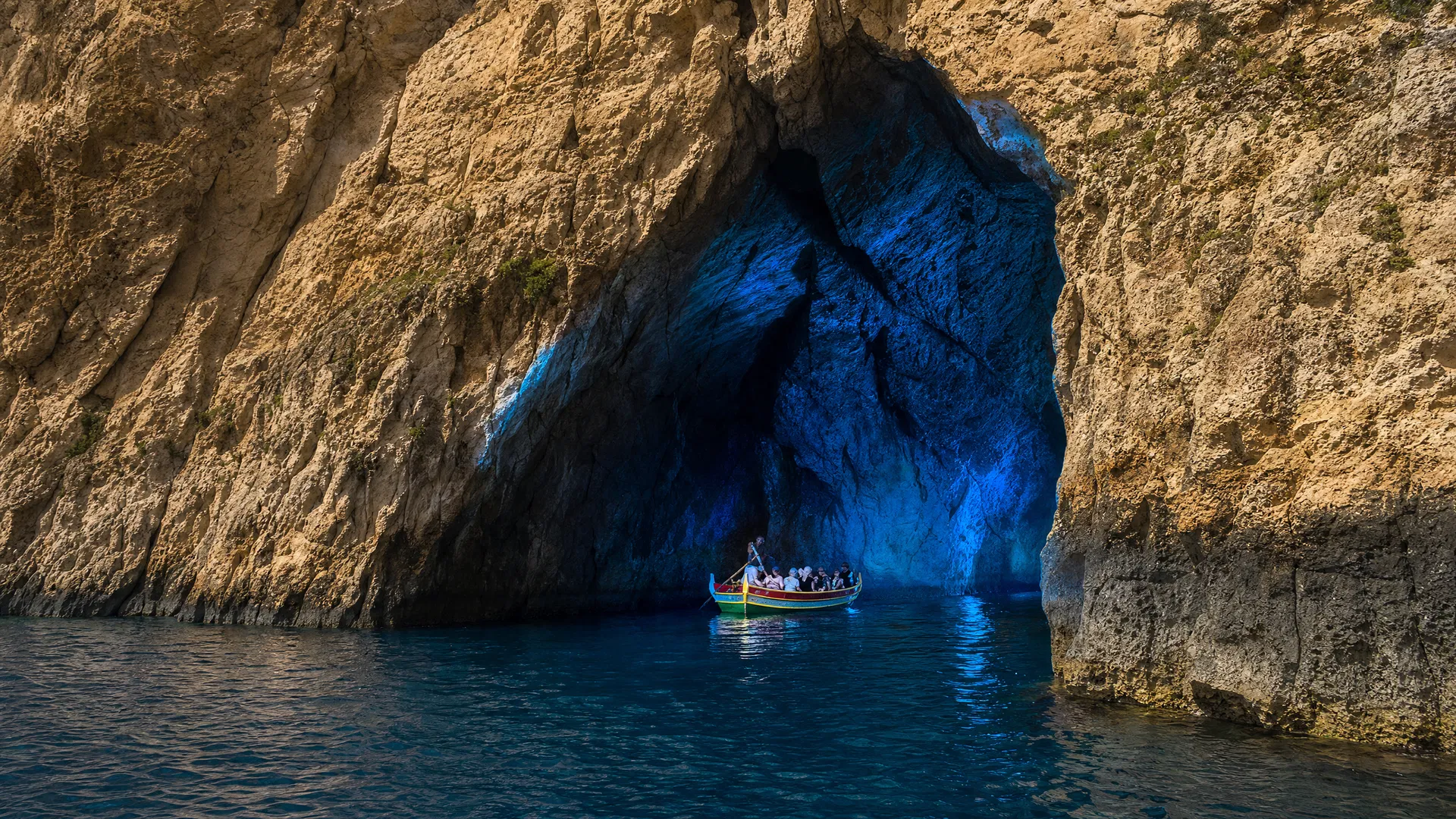
The Blue Grotto is a series of seven sea caves carved into the limestone cliffs on Malta's southern coast, near the small village of Wied iż-Żurrieq. I am Marco, based in Malta. This guide covers the Blue Grotto as a trip-planning option: it is one of the most impressive natural attractions in Malta — and one of the most underrated, because most visitors spend only 20 minutes there on a rushed tour when the experience deserves much more time.
The caves get their name from the extraordinary blue glow that fills them in the morning hours. This effect is caused by bioluminescent algae that lines the cave walls, combined with the way sunlight enters through underwater openings and reflects off the white sandy seabed. The result is a colour of blue that is genuinely unlike anything you will see elsewhere — deeper and more vivid than the Blue Lagoon, and more mysterious. (Trust me, I've seen them all!)
The key fact: The Blue Grotto is only accessible by boat. There is no way to enter the caves from land. Every visit requires a boat, whether a small local vessel from the harbour or a private charter.
Explore routes · Ask about your dates
The Seven Caves
The Blue Grotto complex consists of seven distinct caves, each with its own character:
The Blue Grotto (main cave): The largest and most famous cave, with an entrance arch approximately 8 metres high. The interior glows an intense blue in the morning light. The cave is large enough for small boats to enter.
The Honeymoon Cave: A smaller, more intimate cave with a narrow entrance that opens into a circular chamber. The light effect here is particularly striking because the cave has a small opening in the ceiling that creates a spotlight effect.
The Reflection Cave: Named for the way the water reflects light onto the cave ceiling, creating moving patterns of blue and gold. Best visited when the sea is calm.
The Catechism Cave: One of the deeper caves, with an underwater tunnel that connects to the open sea. Divers and snorkellers explore this cave regularly.
The Mermaid Cave, the Billinghurst Cave, and the Finger Cave complete the series, each with distinct geological formations and light conditions.
How to Visit the Blue Grotto
Option 1: Small Boat from Wied iż-Żurrieq Harbour
The most common way to visit the Blue Grotto is on one of the small traditional boats (luzzus) that depart from the harbour at Wied iż-Żurrieq. These boats carry 6 to 8 passengers and take you on a 20 to 30 minute circuit of the caves.
Cost: Confirm a current quote for your date, group, boat and duration.
The honest assessment: These tours are good value and give you a genuine experience of the caves. The limitation is time — 20 minutes is not enough to fully appreciate what you are seeing — and the fact that you cannot swim or snorkel. The boats also stop running if the sea is even slightly rough, which happens regularly on the southern coast. (I always tell my guests to arrive before 9am for the best light and fewer crowds.)
How to get there: Wied iż-Żurrieq is approximately 30 minutes by car from Valletta or 40 minutes from Sliema. Bus route 201 connects Valletta to the village, though the journey takes about 45 minutes.
Option 2: Private Boat Tour Including the Blue Grotto
A private boat tour that includes the Blue Grotto as part of a longer itinerary is the superior experience. You approach the caves from the sea rather than from the harbour, which gives you a completely different perspective — you see the full scale of the limestone cliffs before entering the caves, and you can spend as long as you want in the area.
What a private tour adds: The ability to snorkel in the clear water outside the cave entrances, where the underwater visibility is exceptional and the marine life is diverse. A private boat can also take you to the quieter caves that the standard harbour tours do not visit, and can combine the Blue Grotto with other stops along the southern coast — including Ghar Lapsi, the Blue Grotto viewpoint, and the cliffs of Dingli.
The southern coast route: A full-day private boat tour of Malta's southern coast is one of the most spectacular things you can do on the island. The coastline between Valletta and the Blue Grotto is largely inaccessible from land and almost never visited by tourists — impressive limestone cliffs, hidden coves, and sea arches that you will have entirely to yourself.
Explore routes · Ask about your dates
The Best Time to Visit
Morning is essential. The Blue Grotto effect depends entirely on the angle of sunlight entering the caves. (This is why timing is everything!) Between 8 AM and 11 AM, the sun is low enough in the sky to shine directly into the cave entrances, creating the maximum blue glow. By early afternoon, the sun has moved and the effect is significantly reduced.
The best months for visiting are May, June, September, and October, when the sea on the southern coast is generally calm and the light conditions are optimal. July and August are also good, but the harbour at Wied iż-Żurrieq gets crowded and the wait for a boat can be 30 to 45 minutes.
Weather note: The southern coast of Malta is more exposed to wind and waves than the northern coast. The small harbour boats stop running if there is any significant swell. A private boat with a larger, more seaworthy vessel can operate in conditions that would ground the harbour boats, though very rough seas will cancel any boat trip.
What to Expect on the Day
The approach: Whether you arrive by car at Wied iż-Żurrieq or by private boat from the sea, the first view of the Blue Grotto is striking. The limestone cliffs rise 50 to 60 metres above the water, and the cave entrances are visible as dark openings at the base of the cliff. The colour of the water in front of the caves — even from a distance — is noticeably different from the surrounding sea.
Inside the caves: The temperature drops noticeably inside the larger caves. The sound of the water echoes off the cave walls. The blue glow, when the light is right, is genuinely spectacular — not a subtle effect but a vivid, saturated blue that fills the entire cave interior. Photographs do not fully capture it.
The snorkelling: The water outside the cave entrances is 4 to 8 metres deep and has amazing clarity. The cave walls underwater are covered in sea fans, sponges, and anemones. Large schools of fish shelter in the shadow of the cliffs. This is one of the best snorkelling locations on the island, and one that most visitors miss entirely because the standard harbour tours do not allow swimming.
Combining the Blue Grotto with Other Stops
The Blue Grotto works best as part of a longer day rather than as a standalone visit. The following combinations make excellent full-day itineraries:
Blue Grotto + Ghar Lapsi + Dingli Cliffs (by boat): A southern coast circuit that covers the most dramatic scenery on the island. The Dingli Cliffs — the highest point in Malta — are spectacular from the sea, with sheer drops of 250 metres into the water below.
Blue Grotto + Blue Lagoon (full day private boat): This is the classic Malta boat day — start with the Blue Grotto in the morning when the light is best, then head north to Comino for the afternoon. The journey between the two takes about 1 hour 30 minutes and passes some of the most beautiful coastline in Malta.
Blue Grotto + Valletta Grand Harbour (half day): A shorter option that combines the caves with a pass through the Grand Harbour — one of the most impressive harbours in the world, with fortifications dating back to the 16th century visible from the water.
Explore routes · Ask about your dates
Frequently Asked Questions
Share this article:
Still planning your trip?
Get Your Free Malta Itinerary — Made for Your Trip
Answer 5 quick questions and receive a free day-by-day Malta itinerary in your inbox, with local guidance, hidden gems, food tips and private boat-tour ideas.
Takes 2 minutes · 100% free · Sent to your email