
Updated:
Malta 5-Day Itinerary: The Best Way to Spend 5 Days (2026 Local Guide)
Five days is the sweet spot for Malta. Long enough to see the main highlights without rushing, short enough to keep the pace enjoyable. I am Marco, based in Malta. This guide offers practical planning advice. This itinerary has been put together by someone who actually lives here — not a travel blogger who visited for a weekend — so every recommendation is based on what genuinely works.
Malta is small (27km long), but there is a surprising amount to see. The key is not trying to do everything in one day. Each area of the island has its own character, and this itinerary groups things geographically so you spend less time in traffic and more time actually experiencing places.
Explore routes · Ask about your dates
Day 1 — Valletta: The World's Smallest Capital
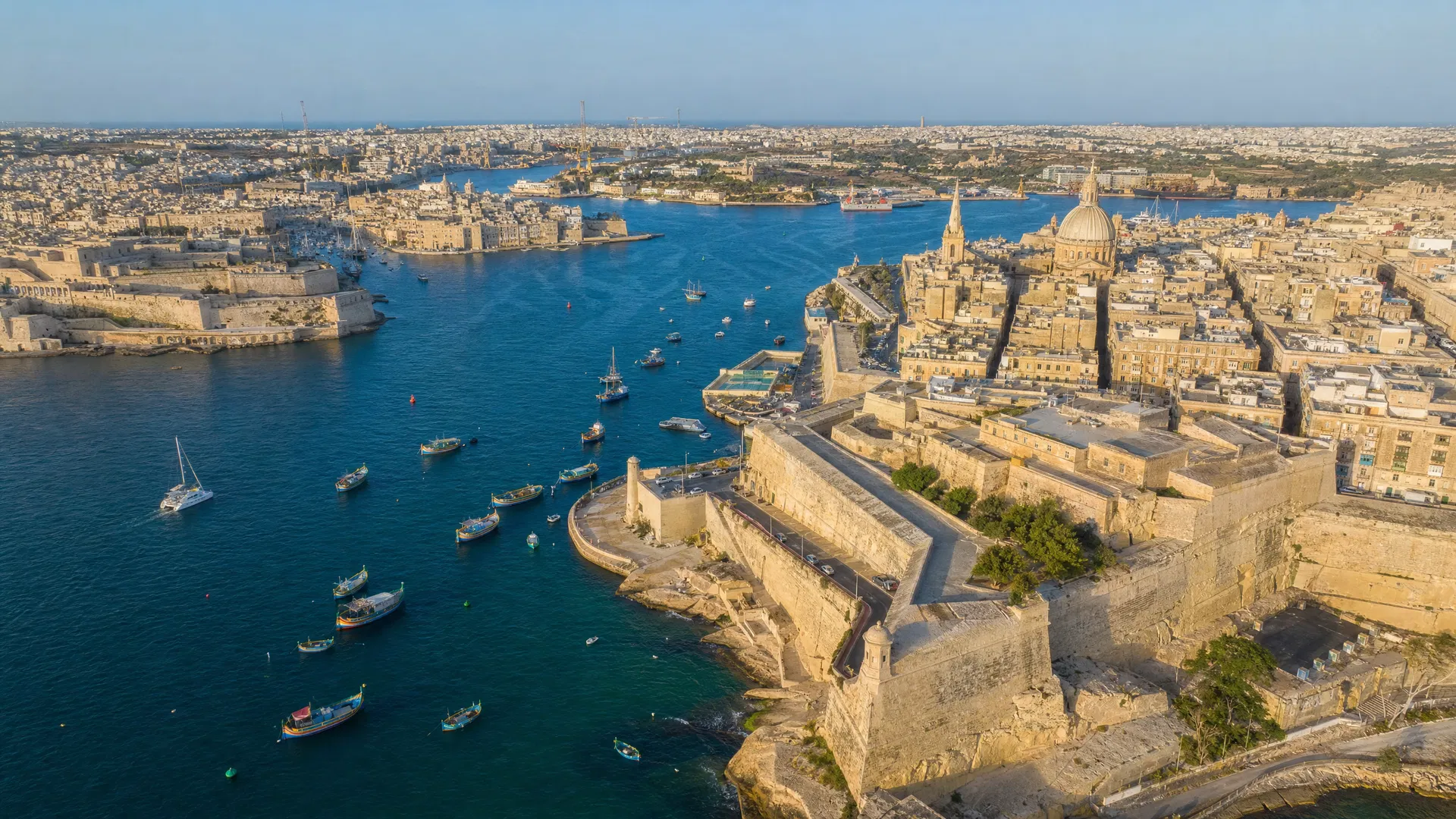
Start in Valletta, the capital, and give it a full day. Most visitors underestimate how much there is to see here. The city was built by the Knights of St John in the 16th century and has barely changed since — it is a UNESCO World Heritage Site and one of the most intact baroque cities in Europe.
Begin at the Upper Barrakka Gardens for a fantastic view of the Grand Harbour. The cannon salute fires at noon and 4pm daily. From there, walk down to St John's Co-Cathedral — the interior is one of the most ornate in the world, with every inch of the floor covered in marble tombstones of the Knights. The Caravaggio paintings inside are genuinely world-class.
For lunch, head to Strait Street (the old sailors' quarter, now full of good restaurants) or grab a pastizzi — the local savoury pastry — from Crystal Palace near the bus terminus for about €0.35 each. In the afternoon, walk the full length of Republic Street and explore the side streets. The city is only 600m wide so you cannot get lost.
In the evening, Valletta has a surprisingly good dining scene. The area around St George's Square comes alive after sunset. Book a table at a restaurant with a Grand Harbour view if you can — the lights of the Three Cities across the water are truly special at night. (I always tell my guests this is a must-do for a romantic evening.)
Day 2 — Mdina, Rabat and the South
Day 2 is for the interior and the south. Rent a car or book a private transfer — public transport to these areas is slow.
Start at Mdina, the ancient walled capital, early in the morning before the tour groups arrive. The city is almost entirely residential with fewer than 300 permanent inhabitants, and in the early morning it is eerily quiet and beautiful. Walk the full circuit of the walls for views across the island. The Mdina Dungeons is touristy but entertaining; the Cathedral Museum is genuinely excellent.
From Mdina, walk 10 minutes to Rabat, the town immediately outside the walls. The St Paul's Catacombs are worth an hour — early Christian burial tunnels carved directly into the limestone. Lunch in Rabat at one of the local restaurants on the main square (far cheaper than Mdina).
In the afternoon, drive south to the Dingli Cliffs — the highest point in Malta at 253m above sea level, with views across to the uninhabited island of Filfla. Then continue to the Blue Grotto for the classic Malta postcard view. If time allows, finish at Marsaxlokk, the fishing village in the southeast, for a late afternoon walk along the waterfront. (In my experience, this is the spot most tourists skip, but it's a real taste of local life.)
Day 3 — Comino and the Blue Lagoon by Private Boat
This is the day most people remember most. The Blue Lagoon on the island of Comino has water so clear and turquoise it looks digitally enhanced — but it is real. The challenge is that it gets extremely crowded from late morning onwards, especially in July and August.
The best way to experience it is by private boat. You leave when you want (ideally before 9am), anchor in the lagoon before the crowds arrive, and can explore the sea caves, Crystal Lagoon, and Cominotto island that the ferry tourists never reach. You also have the flexibility to find a quiet cove elsewhere if the main lagoon is too busy.
Explore routes · Ask about your dates
The boat tour typically takes a full day and includes stops at multiple locations around Comino and the northwest coast of Malta. Bring snorkelling gear (or ask if it is included), plenty of sunscreen, and food and drinks for the day. The water temperature is perfect from June through October.
If you prefer a shared tour, there are also group boats that depart from Sliema and Bugibba — cheaper but with less flexibility and more people. Either way, do not skip Comino — it is truly one of the most beautiful places in the Mediterranean.
Day 4 — Gozo: Malta's Quieter Sister Island
Take the ferry from Cirkewwa in the north of Malta to Gozo (25 minutes, runs every 45 minutes). Gozo is noticeably different from Malta — greener, quieter, more rural, and with a slower pace of life. Many people who visit prefer it.
The Azure Window — the famous natural arch — collapsed in 2017, but the area around Dwejra is still impressive, with the Inland Sea (a small lagoon connected to the open sea through a tunnel in the rock) and dramatic cliff formations. Boat trips through the tunnel into the open sea are available for a few euros.
The Ggantija Temples near Xaghra are older than Stonehenge and the Egyptian pyramids — built around 3600 BC and remarkably well preserved. The Citadel in Victoria (the capital) is a small fortified city on a hill with panoramic views of the entire island. Lunch in Victoria at one of the restaurants near the Citadel.
In the afternoon, drive to Ramla Bay — Gozo's main sandy beach, with distinctive reddish-orange sand — or explore the rural villages in the centre of the island. Take the last ferry back to Malta in the evening (ferries run until around 11pm in summer).
Day 5 — The Three Cities and a Slow Farewell
The Three Cities (Vittoriosa, Senglea, and Cospicua) are the original fortified cities built by the Knights before Valletta existed. They sit across the Grand Harbour from Valletta and are far less visited — which makes them more authentic and interesting in many ways.
Take the ferry from Valletta's waterfront to Vittoriosa (Birgu) — a 10-minute crossing with excellent views of both Valletta and the Three Cities. Walk through the narrow streets of Birgu, visit the Inquisitor's Palace, and walk along the waterfront where superyachts now moor in the historic docks.
From Senglea, the view back across to Valletta from the Gardjola Gardens is arguably the best view in Malta — better than the Barrakka Gardens on the other side. Take the ferry back to Valletta for a final lunch or coffee before heading to the airport.
Practical Tips for 5 Days in Malta
The best time to visit is May, June, September, or October — warm enough for swimming, not overwhelmingly hot, and less crowded than July and August. July and August are peak season with prices 30-50% higher and significantly more tourists at popular spots.
Getting around is easiest by car (roads are chaotic but distances are short) or by combining the bus network with occasional taxis. The bus system covers most of the island but can be slow. Uber does not operate in Malta; eCabs and Bolt are the main taxi apps.
Accommodation is concentrated in Sliema, St Julian's, and Valletta. Sliema and St Julian's are the most convenient bases with the most restaurants and nightlife. Valletta is quieter in the evenings but has excellent boutique hotels and is the best base for culture.
Budget around €80-120 per person per day for a comfortable trip including accommodation, food, transport, and activities. The boat day to Comino is typically the biggest single expense and is worth every euro.
Explore routes · Ask about your dates
Frequently Asked Questions
Share this article:
Still planning your trip?
Get Your Free Malta Itinerary — Made for Your Trip
Answer 5 quick questions and receive a free day-by-day Malta itinerary in your inbox, with local guidance, hidden gems, food tips and private boat-tour ideas.
Takes 2 minutes · 100% free · Sent to your email