
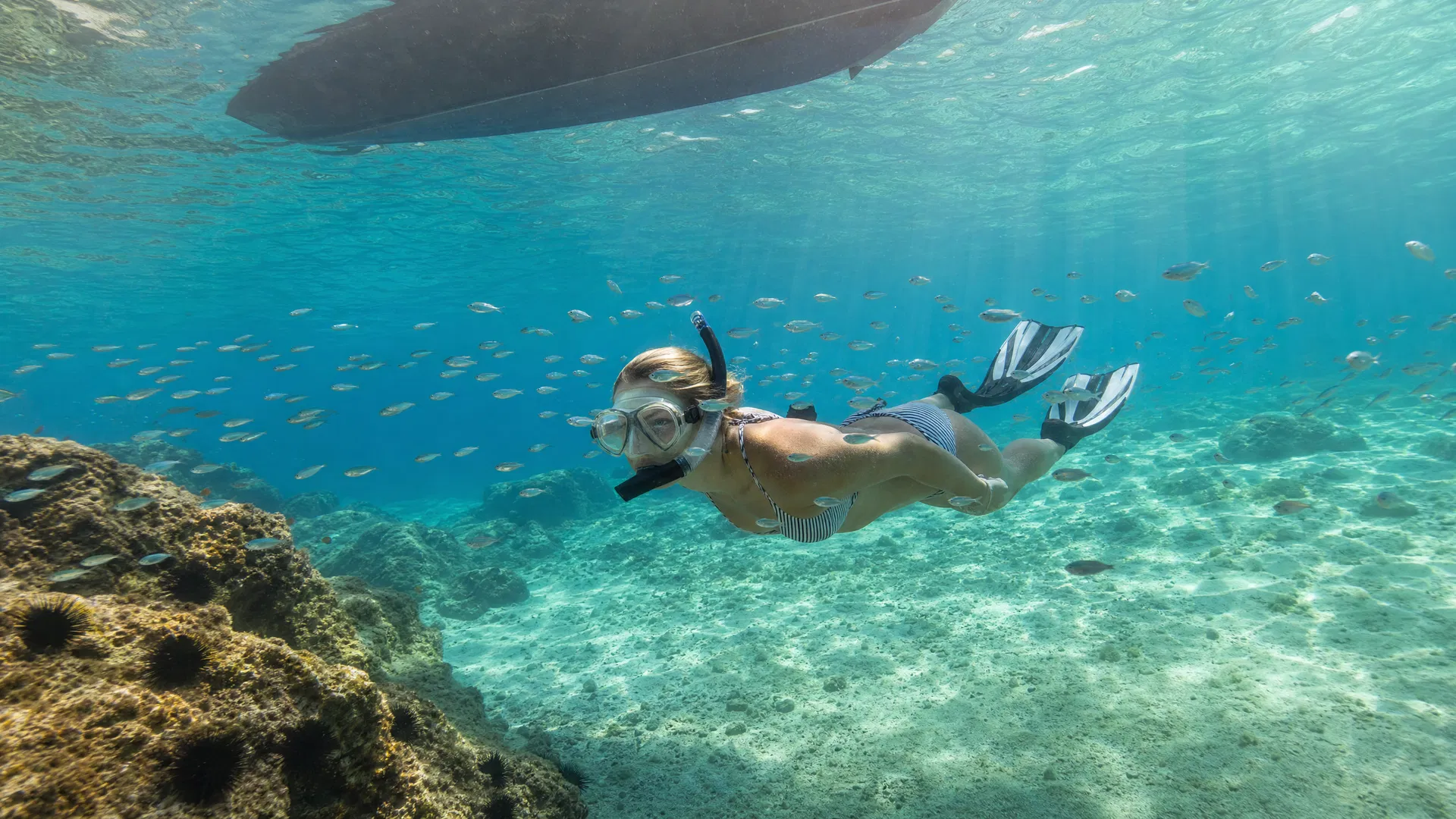
Updated:
Best Snorkelling Spots in Malta by Boat: A Local's Guide (2026)
Why Malta Is One of Europe's Best Snorkelling Destinations
I've been taking visitors out on my boat for years, and the question I get most is where to find the best snorkelling. Malta does not always appear on lists of top snorkelling destinations in Europe, which is precisely why it remains so good. The water clarity is amazing — visibility regularly exceeds 25 to 30 metres in summer — and the rocky limestone coastline creates a complex underwater landscape of caves, arches, and crevices that shelter an impressive variety of marine life.
The honest truth about snorkelling in Malta is that the best spots are not the most accessible ones. The Blue Lagoon gets all the attention, but the truly exceptional underwater experiences are in places that most tourists never reach — hidden coves, sea caves, and sheltered bays that are only accessible by private boat. This guide covers them all.
Explore routes · Ask about your dates
The Best Snorkelling Spots in Malta, Ranked
1. The Sea Caves of Comino (Best Overall)
The northern coast of Comino is lined with a series of sea caves that most visitors to the Blue Lagoon never see. These caves — including Lovers Cave, the Crystal Cave, and the Tunnel Cave — have underwater entrances that create incredible light effects, with shafts of sunlight filtering through the water in shades of blue and green that are genuinely unlike anything else in the Mediterranean.
What you will see: The caves shelter large populations of sea bream, grouper, and moray eels. The rocky walls are covered in sea anemones and sponges. Octopus are common, particularly in the early morning. The water temperature inside the caves is slightly cooler than the open sea, which attracts larger fish.
How to get there: These caves are only accessible by private boat. A skilled captain can navigate into the larger caves and anchor just inside the entrance, allowing you to snorkel in conditions that feel completely private. No shared ferry or organised tour visits these caves.
Best time: Early morning, before 9 AM (I always tell my guests to arrive early to beat the crowds). The light angles are better and the marine life is more active.
2. Santa Maria Bay, Comino
Santa Maria Bay is on the eastern side of Comino, about 15 minutes by boat from the Blue Lagoon. In my experience, this is the spot most tourists skip, but it is a sheltered bay with a small sandy beach, crystal clear water, and almost no visitors — even in peak summer. The bay is protected from the prevailing winds, which means the water is almost always calm and the visibility is exceptional.
What you will see: The rocky edges of the bay are excellent for snorkelling, with dense populations of sea urchins, starfish, and small reef fish. The seagrass beds in the centre of the bay are home to seahorses, though they require patience and a slow approach to spot. The water depth ranges from 1 to 6 metres, making it ideal for all skill levels.
How to get there: Santa Maria Bay is accessible by a small ferry from the Blue Lagoon jetty, but the ferry only runs a few times per day and deposits you at the beach with no flexibility. By private boat, you can anchor in the bay and snorkel directly from the boat, spending as long as you want before moving on.
Explore routes · Ask about your dates
3. The Blue Lagoon, Comino
The Blue Lagoon is the most famous snorkelling spot in Malta and, despite the crowds, it genuinely deserves its reputation. The water is a beautiful shade of turquoise — the result of the white sandy seabed reflecting light through exceptionally clear water — and the underwater visibility is consistently excellent.
What you will see: The sandy seabed is home to various flatfish and rays. The rocky edges of the lagoon have sea urchins, small fish, and occasional octopus. The water is shallow enough (1 to 4 metres in most areas) for confident snorkellers to explore the entire lagoon without difficulty.
The crowd problem: The Blue Lagoon is at its best for snorkelling before 9 AM and after 5 PM, when the shared ferries have left. If you arrive on a private boat at 8 AM, you will have the lagoon almost entirely to yourself. By 11 AM, the number of people in the water makes snorkelling significantly less enjoyable.
Tip: The best snorkelling in the Blue Lagoon is not in the main swimming area but along the rocky edges on the Comino side, where the water is slightly deeper and the marine life is more varied.
4. The Blue Grotto, Southern Malta
The Blue Grotto is a series of sea caves on the southern coast of Malta, near the village of Wied iż-Żurrieq. The caves are famous for the bioluminescent algae that lines their walls, which makes the water glow an intense blue colour — particularly striking in the morning when the sun is at the right angle.
What you will see underwater: The caves have exceptional visibility and the walls are covered in colourful sponges and sea fans. The cave entrances are home to large schools of fish that shelter from the current. The deeper water outside the caves has good populations of sea bream and occasional barracuda.
How to get there: Small boats run from the Wied iż-Żurrieq harbour into the caves throughout the day. A private boat can take you directly from your departure point in Sliema or Valletta, combining the Blue Grotto with other stops along the southern coast.
Best time: Morning, before 10 AM, when the light enters the caves at the optimal angle.
5. Ghar Lapsi, Southern Malta
Ghar Lapsi is a natural swimming pool on the southwestern coast of Malta, formed by a rocky inlet that creates sheltered, calm water even when the open sea is choppy. It is one of the few excellent snorkelling spots that is accessible from shore, but arriving by boat allows you to explore the outer rocks and caves that shore-based snorkellers cannot reach.
What you will see: The rocky walls of the inlet are covered in sea life, including sea urchins, starfish, and various species of wrasse. The outer rocks have larger fish and occasional sightings of barracuda. The water clarity here is among the best on the island.
6. Dwejra Bay, Gozo
Dwejra Bay on the western coast of Gozo is where the Azure Window once stood — the famous limestone arch that collapsed in 2017. The underwater remains of the arch have become a fantastic snorkelling and diving site, with the collapsed limestone creating a complex habitat that now supports more marine life than the arch did when standing.
What you will see: The collapsed arch is covered in colourful sea fans and sponges. The surrounding area has exceptional visibility and large populations of grouper, sea bream, and moray eels. The Inland Sea nearby — a small lagoon connected to the open sea by a tunnel — is also excellent for snorkelling.
How to get there: Dwejra is on the western coast of Gozo, which makes it a natural addition to a full-day private boat trip that combines Comino and Gozo. By private boat from Malta, the journey takes approximately 1 hour 30 minutes.
Explore routes · Ask about your dates
What to Bring for Snorkelling in Malta
Essential gear: A well-fitting snorkel mask is the single most important piece of equipment. Rental masks at tourist sites are often poorly fitted and fog easily. If you are serious about snorkelling, bring your own. A basic snorkel and fins complete the set.
Sun protection: The Mediterranean sun is intense, and the water reflects it. Waterproof sunscreen (SPF 50) applied before entering the water is essential. A rash guard or thin wetsuit top provides additional protection and is comfortable in the water from May to October.
Water shoes: The rocky limestone coastline is sharp and uneven. Water shoes make entering and exiting the water significantly easier and protect against sea urchin spines, which are common in rocky areas.
Underwater camera: Malta's underwater visibility makes it one of the best places in Europe for underwater photography. Even a basic waterproof phone case produces excellent results in the clear, shallow water.
The Best Time of Year for Snorkelling in Malta
| Month | Water Temp | Visibility | Crowds | Verdict |
|---|---|---|---|---|
| May | 19–21°C | Excellent | Low | Ideal |
| June | 22–24°C | Excellent | Medium | Very good |
| July | 25–27°C | Very good | High | Good (go early) |
| August | 27–28°C | Good | Very high | Go early or late |
| September | 26–27°C | Excellent | Medium | Ideal |
| October | 23–25°C | Excellent | Low | Ideal |
September and October are the best months for snorkelling in Malta. The water is warm from the summer, the visibility is at its annual peak as the summer algae bloom subsides, and the crowds have thinned significantly. May and early June are also excellent, with the added benefit of very few tourists.
Why a Private Boat Makes All the Difference
The difference between snorkelling in Malta from a shared tour and from a private boat is not subtle. On a shared tour, you visit the Blue Lagoon main area, swim with 200 other people, and leave when the ferry leaves. On a private boat, you visit the sea caves, Santa Maria Bay, the Crystal Lagoon, and the quieter edges of the Blue Lagoon — spots that most visitors to Malta never see.
A private boat also means you can stay at a spot as long as you want. If you find a cave with exceptional marine life, you can anchor and spend an hour there. If the Blue Lagoon is too crowded, you can move on to somewhere quieter. This flexibility is what separates a good snorkelling day from an unforgettable one.
Explore routes · Ask about your dates
Frequently Asked Questions
Share this article:
Still planning your trip?
Get Your Free Malta Itinerary — Made for Your Trip
Answer 5 quick questions and receive a free day-by-day Malta itinerary in your inbox, with local guidance, hidden gems, food tips and private boat-tour ideas.
Takes 2 minutes · 100% free · Sent to your email